The emptiness
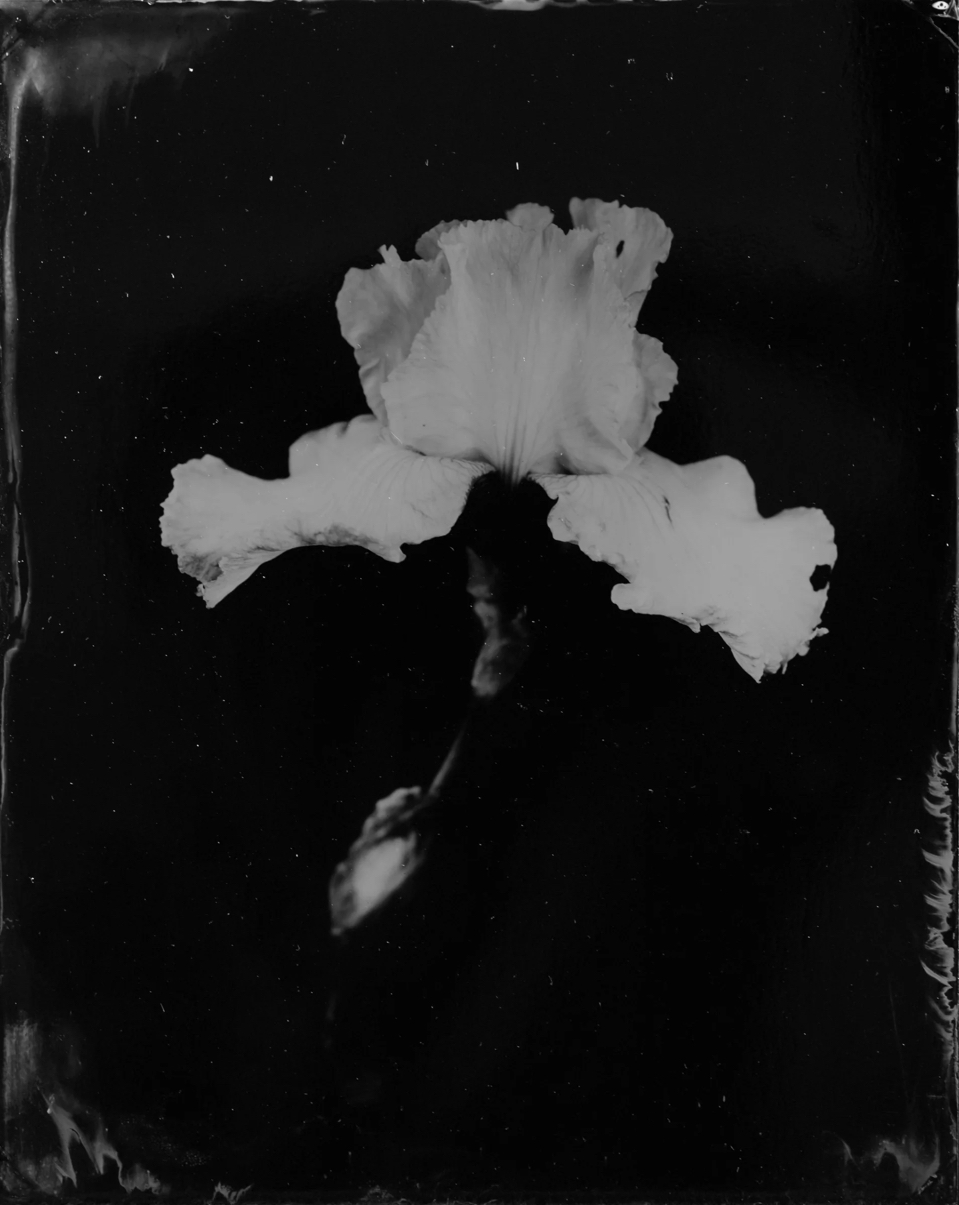
In everyday life, we encounter many examples of emptiness. A hole is one example. There is nothing in a hole, but it is defined by its surroundings. Lao Tzu said:
"Being and non-being generate each other. They cannot exist independently of each other."
The visible forms the shape of a work, but it is what we cannot see that determines its value. Unfortunately, we often no longer know how to deal with emptiness, with nothingness. We are
accustomed to hectic activity, to a flood of images that we encounter almost everywhere. Yesterday I was in a chemist's and had to wait a while. I looked around the checkout area. On the shelf behind it hung a monitor that constantly tried to bombard me with product images in rapid succession. The more we are bombarded with information, the stronger the stimuli have to be for us to even notice anything! Keyword: sensory overload. Yes, this is not an entirely new phenomenon of our time.
Yet emptiness and vast emptiness are something wonderful, almost mystical. Vast emptiness is the sublime in the horizontal plane... the vast desert or the uniform steppe, to name two brief examples that describe vast emptiness well.
Like darkness and silence (which I will discuss in one of my next posts), emptiness is a negation, but one that removes everything that is here and now so that something completely different can become action. Non-being and emptiness are fundamental concepts that make being possible in the first place and have a dialectical relationship with each other.
Empty space is omnipotent because it is all-encompassing. Only in empty space does movement become possible. In my work, I often assign darkness to empty space. For me, darkness must be such that it is enhanced by contrast and thus made perceptible. Only the resulting semi-darkness develops a mysticism that reveals the emptiness completely. The impression is completed when it combines with the auxiliary moment of the sublime.
For me, such moments are very precious when I manage to lose myself completely in a work and thereby feel my deepest inner self. I would also like to achieve this with my own works. That is why I strive to achieve a radical reduction in order to give emptiness an ever greater space. Finally, I would like to share with you a passage I found at Dr Ursula Baatz.
Abbot and Zen master Dōgen wrote: "When human beings attain enlightenment, it is like the moon reflecting in water. The moon appears in the water, but does not get wet, and the water is not disturbed by the moon. The light of the moon covers the earth and yet can be contained in a small pond, a tiny dewdrop, and even the smallest drop of water." (in Baatz, 1983, p. 37).
For me, emptiness is an essential component of my work, but not the only one. Like the light of the moon, silence, wonder, the sublime, emotional communion and the numinous also envelop my work during the creative process, and I allow myself to be touched by the sacred. I would like to write about what I mean by this in particular in one of my next posts here.